Tools to Optimise B2C Product Features Using Surveys & Feedback

Samee
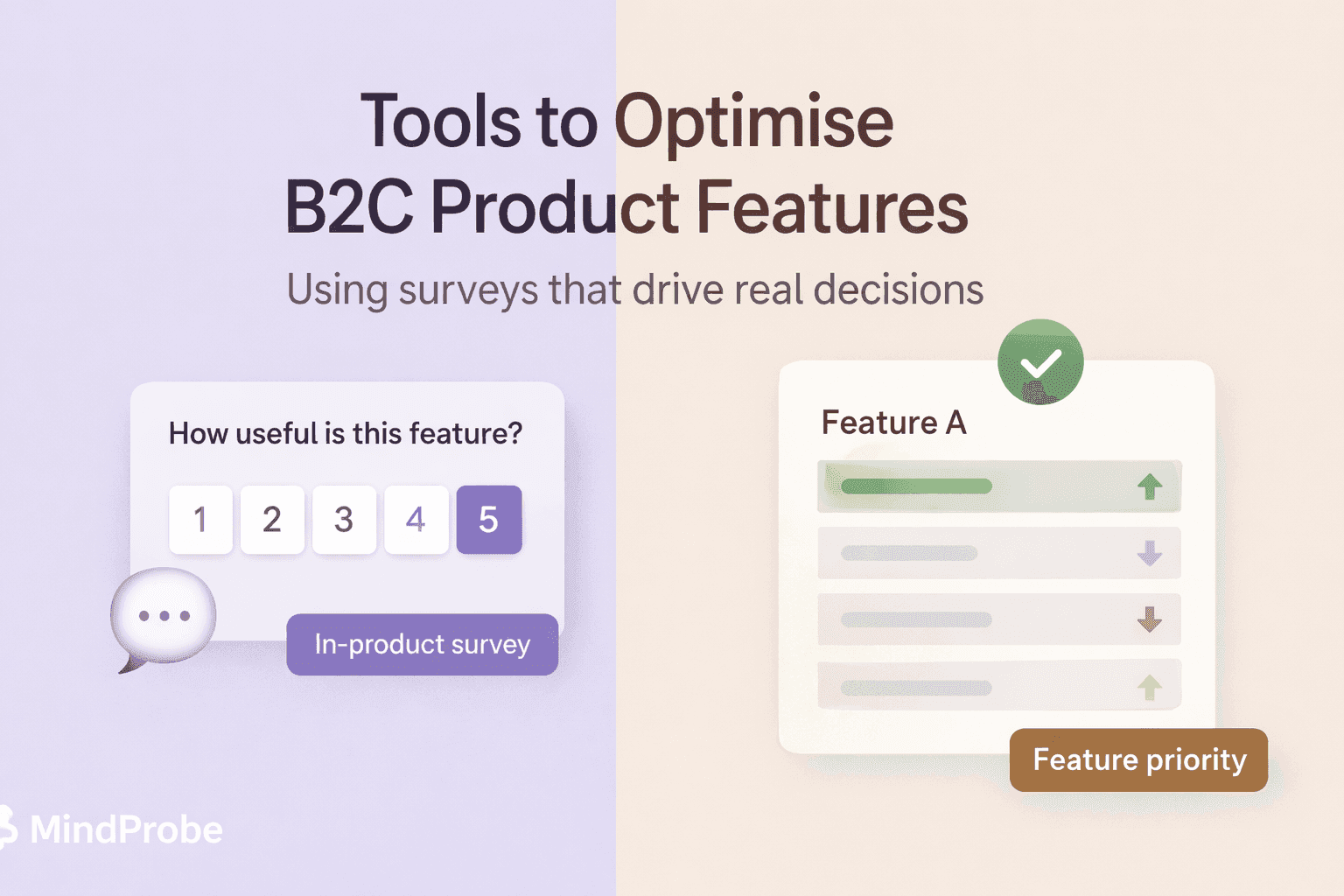
Customer feedback alone does not drive better product decisions. B2C teams need the right tools and workflows to optimise product features using surveys. This article explores how survey-led product research, in-product intercept surveys, and scalable analysis help teams prioritise features, reduce guesswork, and build products customers value.
Customer feedback is one of the most powerful inputs a B2C product team can use, but only when it is collected in the right way and turned into clear decisions.
Most B2C teams already use surveys, they run NPS, collect feature requests, monitor reviews, and gather feedback through support channels. Yet despite this constant flow of customer input, feature prioritisation often remains slow, reactive, and driven by internal opinion.
The issue is not a lack of data, rather, it is the lack of the right tools and workflows to optimise B2C product features using surveys in a structured and repeatable way.
High-performing B2C teams increasingly rely on survey-led product research tools, including in-product intercept surveys, to capture feedback in context, analyse it at scale, and connect insights directly to roadmap decisions.
This blog explains how modern B2C teams use surveys to optimise product features, what tools actually matter, and how platforms like MindProbe can help your team move from feedback to action.
Why B2C product teams struggle with feature prioritisation
Feature prioritisation is where customer needs, business strategy, and technical constraints collide. As products scale, this tension becomes harder to manage.
Common challenges include:
- Conflicting feedback from different customer segments
- Feature requests driven by a vocal minority rather than broad impact
- Feedback collected outside the product experience
- Large volumes of open-ended responses that are hard to analyse
- Manual workflows that do not scale
Many teams collect feedback continuously but analyse it inconsistently, while others rely heavily on quantitative scores without understanding the reasons behind them. In both cases, feedback becomes fragmented, subjective, and difficult to defend in roadmap discussions.
This is why B2C teams increasingly adopt tools to optimise product features with surveys, rather than relying on spreadsheets, ad-hoc tagging, or disconnected tools.
Surveys vs questionnaires: a critical distinction for product decisions
A questionnaire is a set of questions designed to collect information. In B2C product teams, questionnaires are often used to:
- Validate assumptions
- Compare feature concepts
- Measure satisfaction or usage
- Collect quick pulse feedback
Questionnaires focus on what users say.
A survey, by contrast, is the full research process. It includes question design, audience targeting, segmentation, analysis, and interpretation. Surveys focus on why feedback exists and what it means for decisions.
This distinction matters because optimising product features is not about counting responses. It is more about understanding trade-offs, context, and impact, which requires analysis, not just collection.
The best tools to optimise B2C product features with surveys prioritise insight generation and decision support, not just response volume.
The survey types B2C teams use to optimise product features
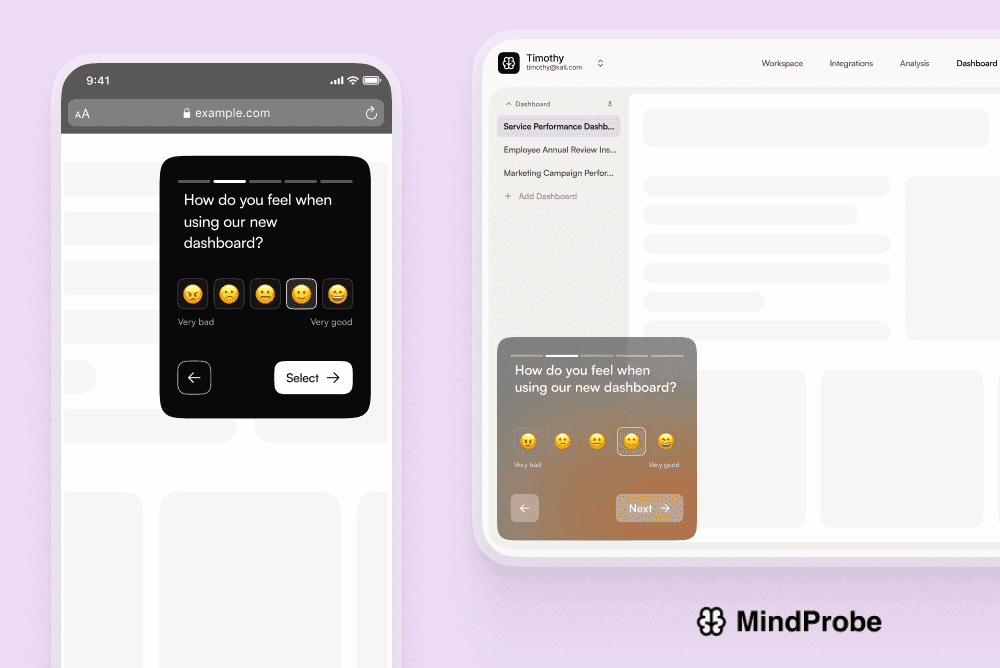
High-performing B2C teams use multiple survey types depending on the decision they are trying to make. Relying on a single feedback method almost always leads to blind spots.
1. In-product intercept surveys
In-product intercept surveys collect feedback inside the product experience, triggered by real user behaviour.
They are especially effective for:
- Understanding feature usability
- Identifying friction points
- Capturing feedback at moments of confusion or success
- Validating changes immediately after release
Because responses are tied to actual behaviour, in-product surveys provide context that email surveys or generic forms cannot. This makes them one of the most powerful tools for optimising B2C product features.
2. Product and feature feedback surveys
These surveys focus on specific features or workflows and typically combine:
- Quantitative ratings or rankings
- Open-ended “why” questions
- Segmentation by usage, plan, or lifecycle stage
They help teams decide what to improve, remove, or invest in next.
3. Brand and perception tracking surveys
Brand tracking surveys measure how trust, perception, and value change over time. While often owned by marketing, they directly influence product strategy by shaping which features reinforce brand positioning.
4. Competitor and switching surveys
Competitor analysis surveys reveal why users choose alternatives, which features drive switching, and where differentiation opportunities exist.
The key is not running more surveys, it is using the right survey type for the right decision, supported by tools that connect insights across research streams.
How B2C teams choose the right feedback method
A simple decision framework helps teams avoid collecting unnecessary data or missing critical insight:
- Validating assumptions or comparing options: Short questionnaires or in-product intercept surveys
- Understanding trade-offs and roadmap priorities: Full surveys with segmentation and open-ended analysis
- Diagnosing experience friction: Behaviour-triggered in-product surveys
As decisions become more strategic, analysis quality gradually becomes the bottleneck. This is why many teams move away from manual workflows towards dedicated survey tools for SaaS product teams.
What effective survey-driven feature prioritisation looks like in practice
Teams that consistently build the right features follow a repeatable workflow:
1. Capture feedback in context
In-product intercept surveys collect real-time reactions, while targeted surveys gather broader input.
2. Segment responses automatically
Feedback is analysed by user type, behaviour, lifecycle stage, or subscription tier.
3. Combine quantitative and qualitative insight
Rankings show scale and importance. Open-ended responses explain motivation.
4. Identify patterns and drivers
AI-assisted analysis surfaces recurring themes, feature drivers, and unmet needs.
5. Translate insight into prioritisation
Insights are structured to support roadmap decisions, not just reporting.
This approach replaces opinion-driven debates with evidence-based decision-making.
Common mistakes that prevent teams from optimising product features
Even teams that invest heavily in feedback often struggle due to avoidable mistakes:
- Treating feedback volume as a proxy for importance
- Ignoring differences between user segments
- Asking vague or unfocused questions
- Collecting feedback outside the product context
- Relying on manual tagging and spreadsheets
These issues slow down decision-making and increase the risk of building features that do not deliver impact.
How MindProbe helps B2C teams optimise product features
MindProbe is built for B2C teams that want to move beyond collecting feedback and start making confident product decisions.
With MindProbe, teams can:
- Run in-product intercept surveys triggered by real user behaviour
- Design product, brand, and competitor surveys aligned to specific decisions
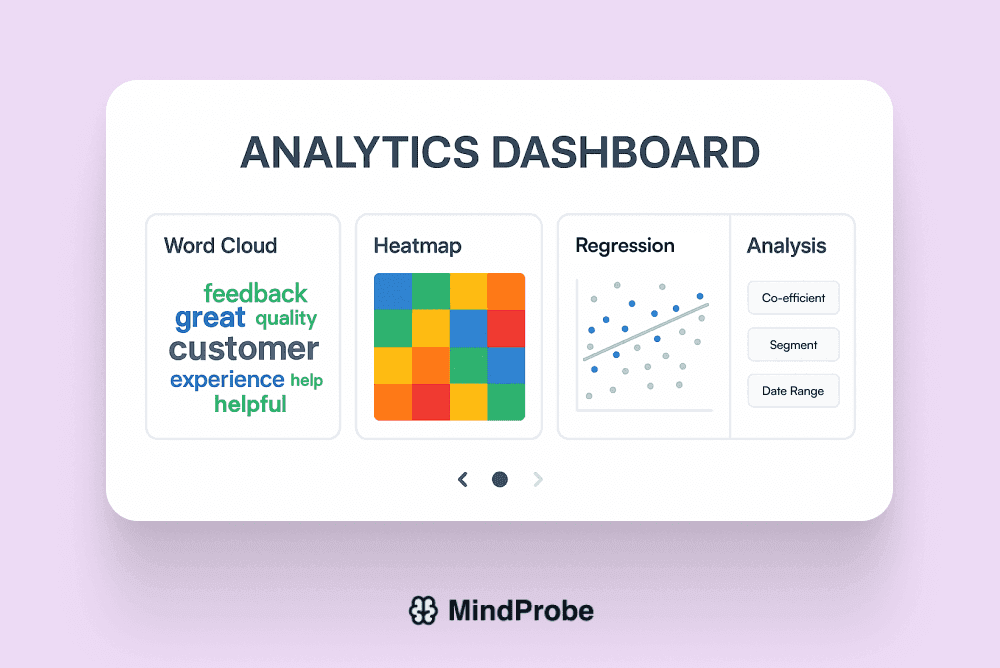
- Analyse open-ended feedback at scale using AI
- Automatically surface patterns across customer segments
- Connect multiple research streams in a single insight workflow
Instead of static charts and disconnected tools, MindProbe provides continuously updated insights that directly support feature prioritisation and roadmap planning.
Key takeaways
Customer feedback only creates value when it informs decisions.
Questionnaires collect information.
Surveys, especially in-product surveys, helps in creating understanding.
B2C teams that invest in the right tools to optimise product features with surveys move faster, reduce guesswork, and build products customers genuinely value.
Feature prioritisation will always involve trade-offs. The teams that win are the ones that use feedback to sharpen judgement, not replace it.
Frequently Asked Questions (FAQs)
What are the best tools to optimise B2C product features with surveys?
The best tools combine in-product intercept surveys, advanced analysis, segmentation, and insight workflows. Platforms that stop at data collection often create analysis bottlenecks.
How do in-product surveys improve feature prioritisation?
In-product surveys capture feedback in context, tying responses directly to user behaviour. This makes insights more actionable and reduces interpretation risk.
Are surveys better than feature request boards?
Feature requests highlight individual needs. Surveys reveal patterns across segments, helping teams prioritise features with the greatest overall impact.
Can small B2C teams use surveys effectively?
Yes. With AI-assisted analysis and structured workflows, small teams can extract high-quality insight without dedicated research teams.